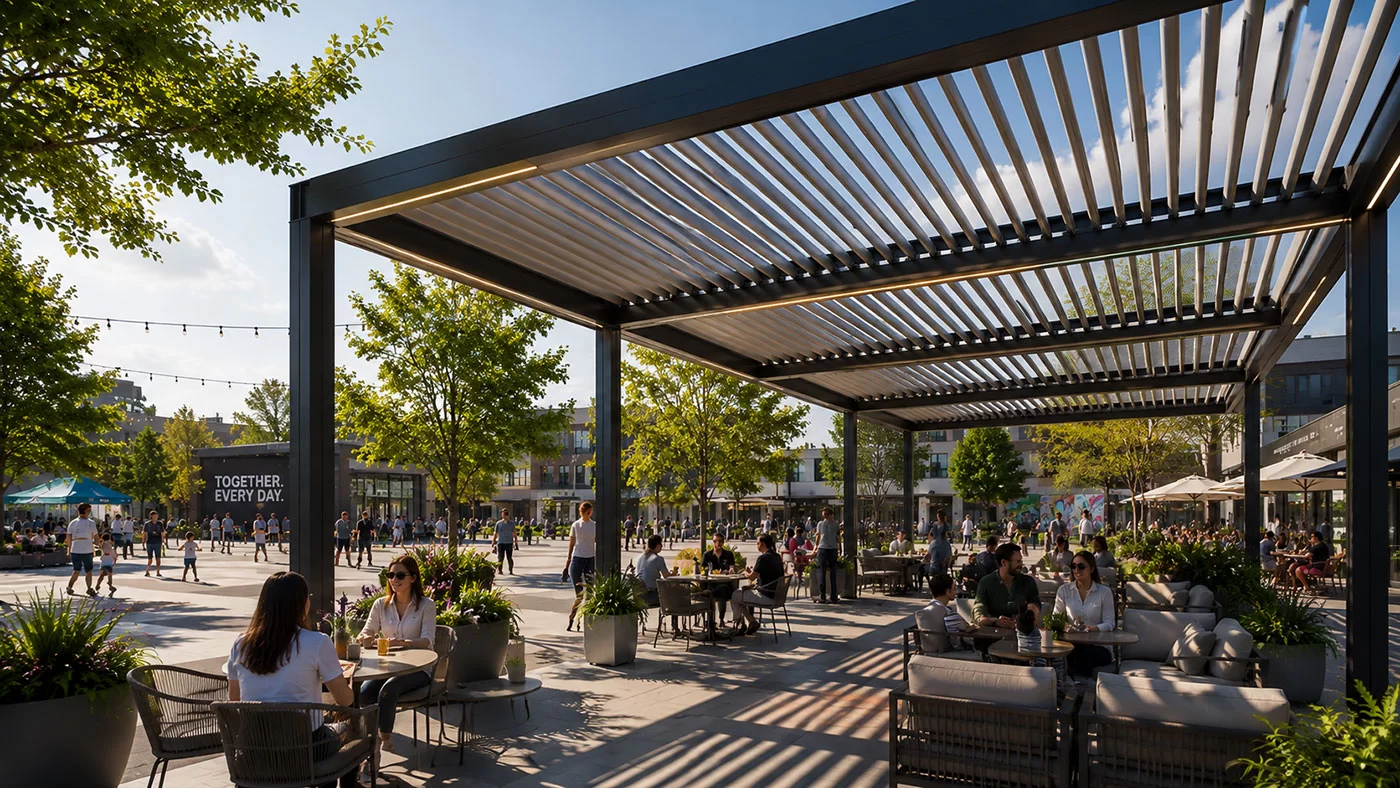
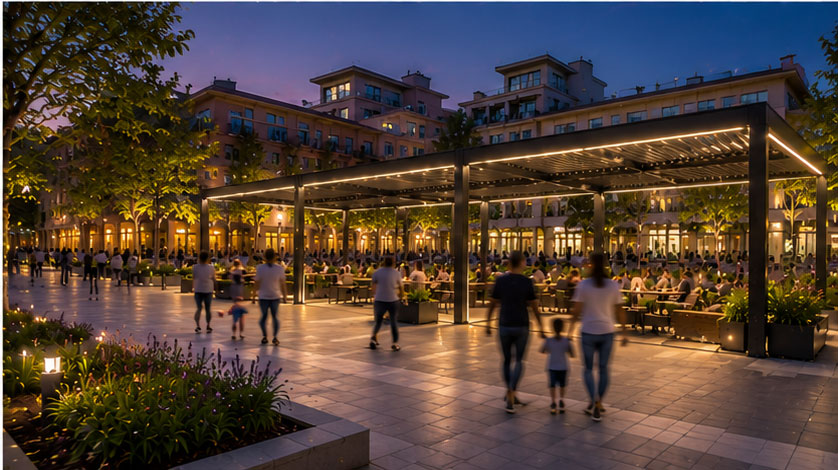
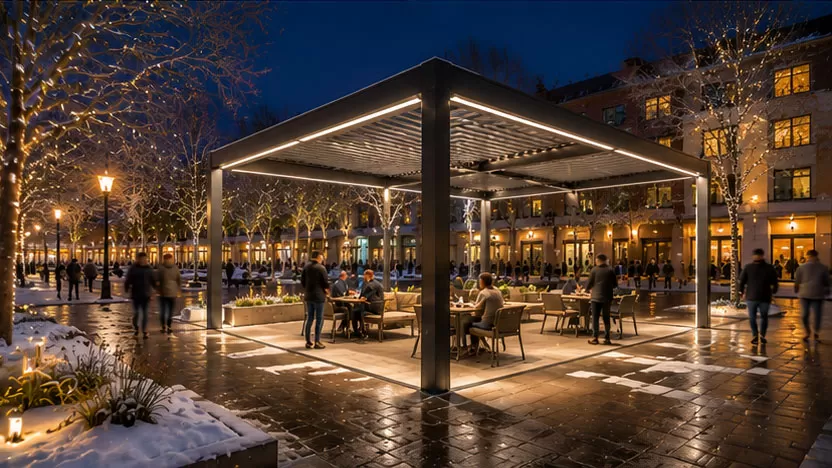
Bioclimatic pergolas in public spaces are designed to be both robust and visually restrained, supporting architecture and landscape design.
The systems support calm, coherent environments that feel like a considered part of the public landscape.


Custom retractable pergolas, louvered roofs, glass enclosures and outdoor living systems designed for residential and commercial spaces across the USA.
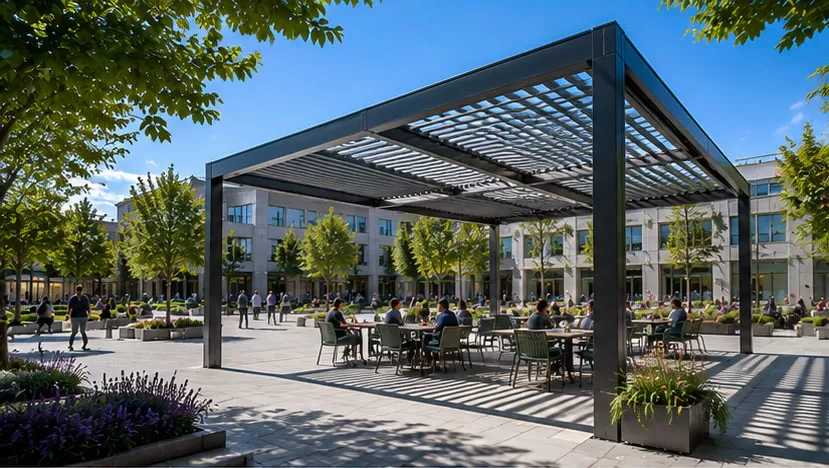
A bioclimatic pergola is an architectural structure with a motorized, adjustable roof and optional glass or screen closures.
In community and public settings, it functions as a flexible, semi-outdoor canopy that can be opened to the sky or closed for shelter.
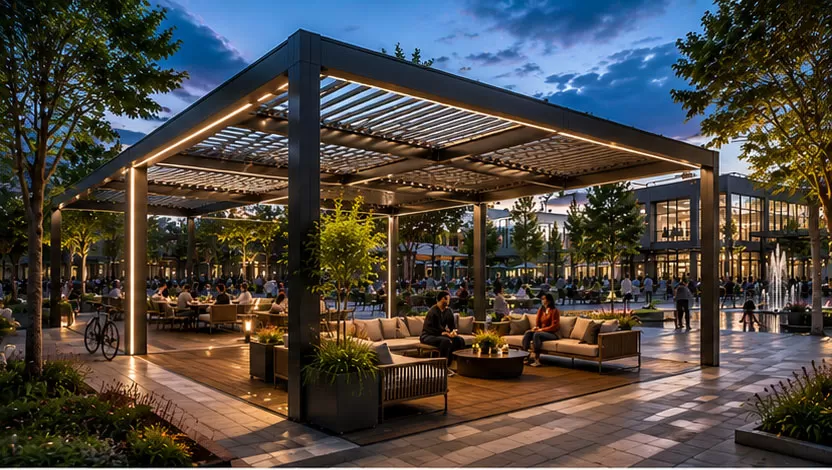
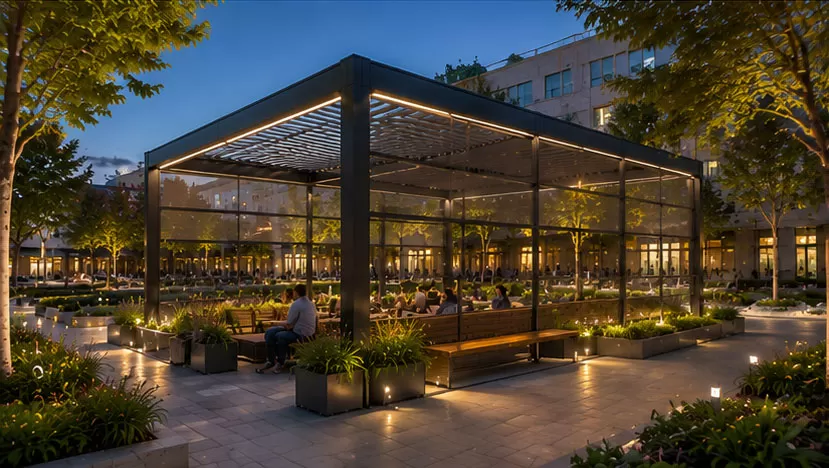
Adjustable aluminium louvers or retractable roof panels provide flexible protection from sun, wind, and changing weather conditions, while integrated drainage systems help manage sudden rainfall in public and shared outdoor environments. Depending on project requirements, the system can be operated through remote control, wall switch, or full automation integration. Optional glass and screen systems can also be added to reduce wind, glare, and direct exposure without closing off the space from daylight and fresh air. The result is a permanent and durable architectural element that supports everyday public use, community gatherings, and seasonal events across plazas, parks, and other shared civic spaces.
These systems can be integrated into many types of community and civic spaces.
Well-designed public spaces invite people to stay, connect, and participate—not just pass through.
The focus is on comfort, accessibility, and quality of public life, not on commercial return.
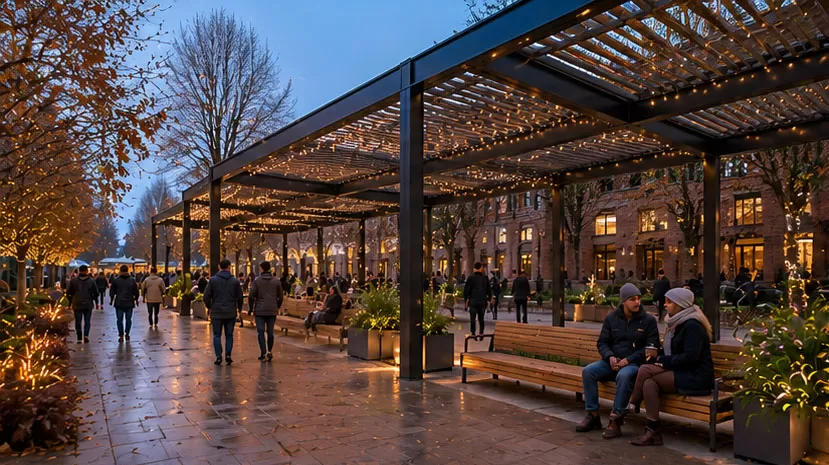
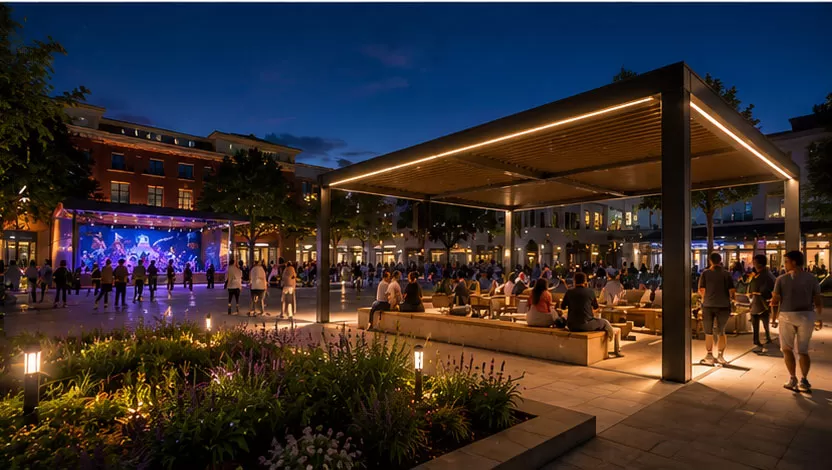
Provide shade in summer, shelter in shoulder seasons, and protection from light rain so spaces stay active for more of the year.
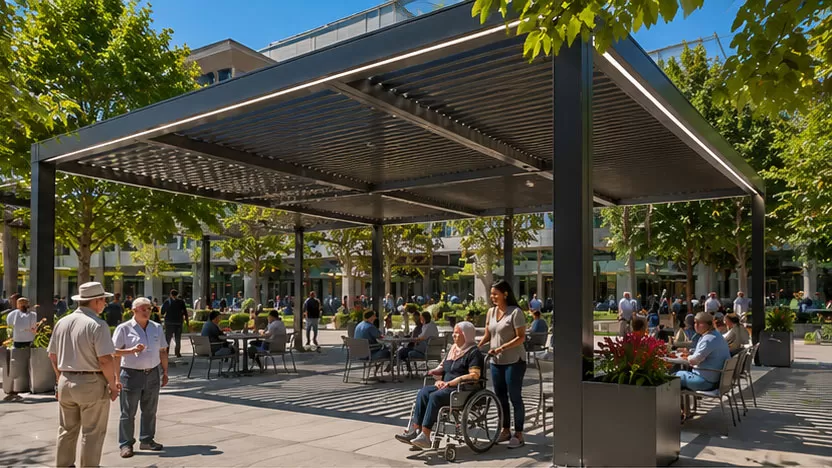
Reduce heat and glare for children, older adults, and people sensitive to sun or weather, without closing off fresh air and daylight.
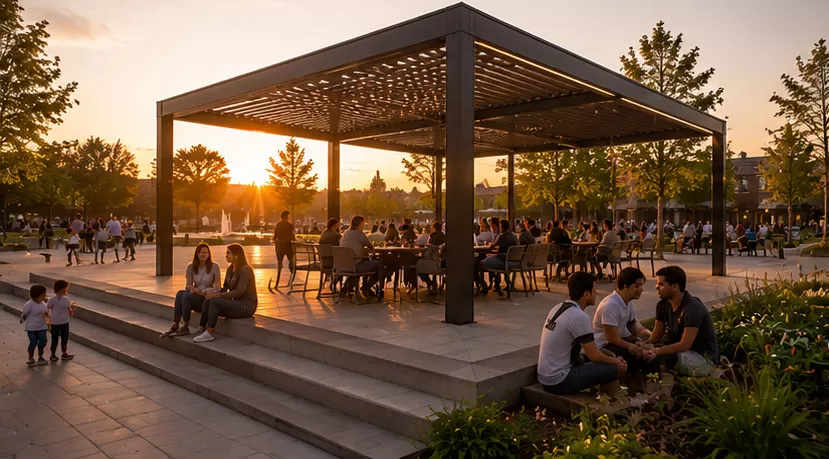
Define outdoor “rooms” for informal seating, workshops, markets, performances, and community events.
Use structure, light, and materials to give each square, courtyard, or yard its own recognizable place character.
Bioclimatic pergolas in public spaces are designed to be both robust and visually restrained, supporting architecture and landscape design.
The systems support calm, coherent environments that feel like a considered part of the public landscape.
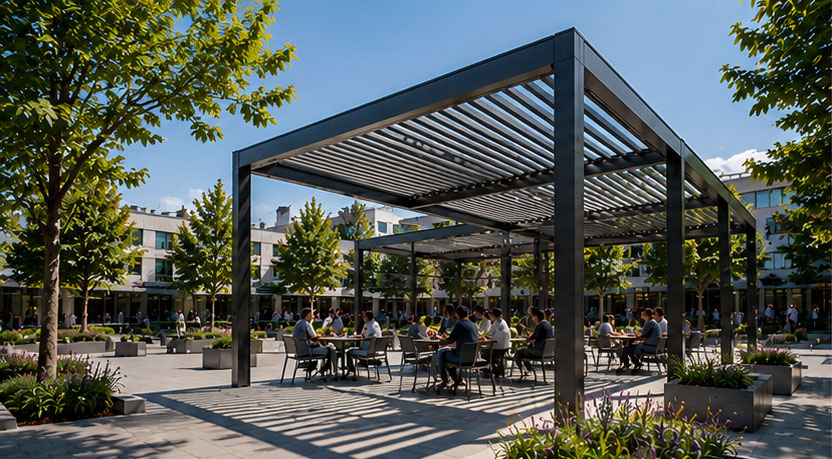
Aluminium profiles with clean lines that can be scaled to plazas and courtyards
Bioclimatic louvered roofs that tilt to manage shade and daylight
Optionally retractable roof modules for fully open-sky use when desired
Glass roof options where daylight and visibility are priorities
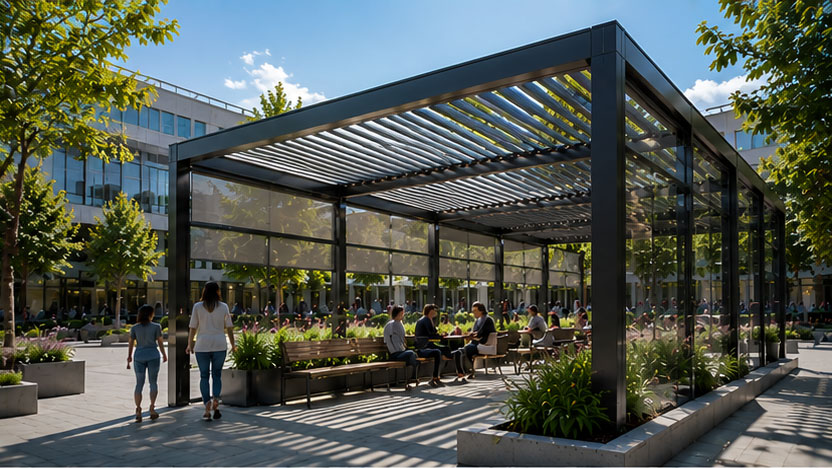
Optional glass or screens in more sheltered community yards or semi-enclosed courtyards
Side elements that reduce wind and glare without creating closed indoor rooms
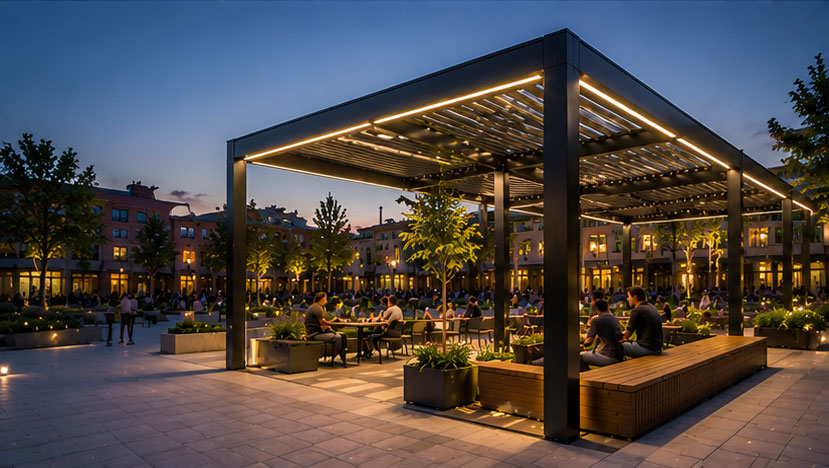
Durable powder-coated finishes selected to coordinate with paving, planting, and built form
Integration options for lighting, signage, seating, and small infrastructure elements
Capacity to align with broader public realm guidelines and design codes
For municipalities, planners, and design teams:
Structural profiles and connection details suitable for public spaces and varying ground conditions
Drainage layouts coordinated with surface water management and landscape design
Glass and aluminium options aligned with applicable safety and performance standards
Motor, control, and sensor information for integration with site or district controls if required
2D/3D drawings and BIM objects available for coordination with urban design and landscape models
We collaborate with architects, landscape architects, and public sector teams so pergolas fit within masterplans, accessibility strategies, lighting plans, and maintenance regimes.
In community and public settings, comfort and clarity are essential.
These are quiet, supportive interventions that make public spaces more usable, more inclusive, and more welcoming.
Louvers and screens help manage direct sun and wind, making it easier to stay outside longer in a wider range of weather conditions.
Controlled shade reduces glare and extreme contrast, supporting comfort for people of all ages and abilities.
Covered seating and gathering areas make outdoor spaces more appealing to people who may be sensitive to sun, rain, or heat.
Pergolas help define where to sit, wait, or gather, making spaces easier to understand—especially for visitors, children, and older adults.
Here are answers to some of the most common questions we receive about pergola systems, installation, and performance.
Regulations vary by country, city, and project type. In many cases, bioclimatic pergolas require approval, especially when enclosed with glass. We can provide technical drawings and information to support conversations with your architect or local authorities.
Timelines depend on project size and season. After design approval, production typically takes several weeks, followed by an agreed installation date. We’ll share a detailed schedule with your offer.
Impergo systems are engineered and configured according to local wind loads and exposure. Integrated drainage channels manage rainwater, and when closed, the roof is designed to protect people and furniture below.
Yes. For colder regions, we select appropriate profiles, spans, and roof systems. Glass and shading options help improve comfort and energy performance
Mostly simple care: cleaning aluminium and glass with mild detergent, keeping drainage channels clear, and having motors and moving parts inspected at recommended intervals.
Many Impergo pergolas are designed to accept glass walls and shading systems at a later stage. You can start with a roof-only system and upgrade as your needs evolve.
Yes. Most bioclimatic louvered and retractable roofs can be motorized, with options for remote control, wall switches, app integration, and weather sensors.
We offer defined warranty periods for the aluminium structure, motors, and surface finishes. Details are provided with each project proposal.